Lock Nuts
Lock nuts resist loosening from vibration and torque, holding a joint tight without a separate locking washer or thread adhesive. Eugene Fastener & Supply stocks the full lock-nut family: nylon-insert (nylock) lock nuts for everyday vibration resistance, all-metal prevailing-torque lock nuts — the type commonly called a Stover or Grade C nut — for heat and heavy-duty service, serrated flange lock nuts that bite into the surface, K-lock (Keps) nuts with a captive star washer, and Flexloc, reversible, and slip-on styles for specialty needs. Available in steel (zinc and plain), 18-8 and 316 stainless, and brass, in inch and metric threads.
Which one you need depends on the service: nylon-insert for general assembly and re-use, all-metal Stover-type for high temperature or where the nylon would fail, serrated flange where you want built-in bearing surface and bite, and K-lock for fast electrical and sheet-metal assembly. Browse the styles below, or contact our team for grade matching, cross-references, or bulk pricing. We sell by the piece or in bulk with same-day shipping on orders placed before 2pm Pacific.
Goes Well With
Helpful Guides

Lock Nuts — Nylon-Insert, All-Metal (Stover), Flange & K-Lock
Need lock nuts for a production run, a grade callout, or a high-temperature application?
Get Job Pricing / Submittals Email Sales
Include the thread size, lock style, material, and quantity for fastest quoting.
Types of Lock Nuts We Stock
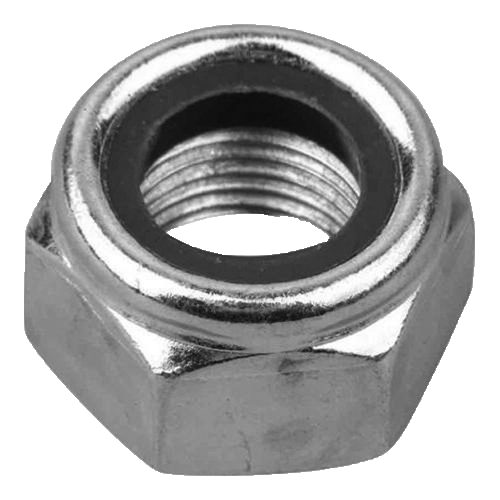
- Nylon-Insert Lock Nuts (Nylock) — a nylon collar grips the bolt threads to resist loosening. The default lock nut for general assembly; re-usable a limited number of times. Steel, 18-8 and 316 stainless, brass, inch and metric.
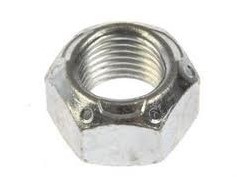
- All-Metal Prevailing-Torque Lock Nuts (Stover / Grade C) — an all-steel design with a distorted upper thread that grips without any nylon. The right choice for high temperature, where nylon would melt, and for heavy-duty and reusable service. Commonly called a Stover nut.
- Grade 9 All-Metal Lock Nuts — higher-strength all-metal lock nut for Grade 8 / Grade 9 bolt assemblies.
- Serrated Flange Lock Nuts — an integrated washer face with serrations that bite into the surface to resist back-off; spreads load and locks in one part.
- K-Lock (Keps) Nuts — a free-spinning captive star washer speeds electrical and sheet-metal assembly.
- Flexloc Lock Nuts — collet-style all-metal lock nut for high-vibration and aerospace-type service.
- Reversible Lock Nuts — lock in either orientation.
- Slip-On Lock Nuts — push-on retainers for light-duty retention.
How to Choose a Lock Nut
- General assembly, moderate vibration, may need to remove: nylon-insert (nylock).
- High temperature (above ~250°F), heavy-duty, or frequent reuse: all-metal prevailing-torque (Stover) — the nylon in a nylock can soften and fail with heat.
- Want built-in bearing surface and extra bite: serrated flange lock nut.
- Fast electrical / sheet-metal assembly: K-lock (Keps).
- Match the grade: use a lock nut rated for your bolt — Grade 8 / Grade 9 bolts call for a Grade 9 all-metal lock nut.
Materials & Finishes
| Material | Best For |
|---|---|
| Steel, Zinc / Plain | General indoor and light outdoor service — the default. |
| 18-8 Stainless | Outdoor, food, and washdown environments. |
| 316 Stainless | Marine and chloride service. |
| Brass | Electrical and non-magnetic applications. |
Lock Nut FAQ
How does a lock nut keep from loosening?
Different styles use different mechanisms. A nylon-insert (nylock) nut has a nylon collar that grips the bolt threads. An all-metal prevailing-torque nut (Stover) has a distorted top thread that creates friction. A serrated flange nut bites into the bearing surface. A K-lock nut uses a captive star washer. All resist the back-off that vibration and thermal cycling would otherwise cause.
Nylon-insert (nylock) vs. all-metal lock nut — which should I use?
Use nylon-insert for general assembly, moderate vibration, and where you may need to remove and reuse the nut a few times. Use an all-metal prevailing-torque (Stover) nut for high temperature, heavy-duty service, or frequent reuse — the nylon in a nylock softens and loses grip above roughly 250°F, while an all-metal nut holds. For Grade 8/9 bolts, use a Grade 9 all-metal lock nut.
What is a Stover nut?
A Stover nut is an all-metal prevailing-torque lock nut — a one-piece steel nut with a distorted upper thread that grips the bolt by friction, with no nylon insert. It’s used where heat, heavy loads, or reuse rule out a nylon-insert nut. We stock it as our All-Metal Prevailing-Torque (Grade C) lock nut, plus a Grade 9 version for high-strength assemblies.
What is a K-lock or Keps nut?
A K-lock (Keps) nut has a free-spinning, captive external-tooth star washer attached to the nut. The washer can’t fall off, so assembly is fast — common in electrical panels and sheet-metal work. The teeth bite into the surface to resist loosening under light to moderate load.
Can lock nuts be reused?
It depends on the type. Nylon-insert nuts can be reused a few times but lose grip as the nylon wears — replace them on critical joints. All-metal prevailing-torque (Stover) nuts tolerate more reuse cycles. Serrated flange and K-lock nuts mar the surface, so reuse is fine but the bite is best on first install. For safety-critical joints, use a fresh lock nut.
What temperature can a nylon-insert lock nut handle?
Standard nylon-insert lock nuts are rated to roughly 250°F (about 120°C). Above that the nylon softens and the locking grip degrades. For higher temperatures use an all-metal prevailing-torque (Stover) or Grade 9 all-metal lock nut.
What is a serrated flange lock nut?
It combines a hex nut, a built-in washer face, and serrations on the bearing face that bite into the joint surface to resist loosening. It spreads clamp load like a washer and locks in one part — good for soft or thin materials and high-volume assembly. Note the serrations mar the surface, so it’s not ideal on finished faces.
What materials are lock nuts available in?
Steel in zinc and plain finishes (the default), 18-8 stainless for general corrosion resistance, 316 stainless for marine and chloride service, and brass for electrical and non-magnetic work — in both inch and metric threads.
Do you sell by the piece, and can you cross-reference part numbers?
Both by the piece and in bulk. Send us any manufacturer, DIN, or legacy part number — including Stover, Flexloc, or Keps references — and we’ll match it to a stocked equivalent, usually the same business day.
Why Buy Lock Nuts from Eugene Fastener
- The full lock-nut family — nylock, all-metal (Stover), Grade 9, serrated flange, K-lock, Flexloc, reversible, and slip-on.
- All materials — steel zinc/plain, 18-8 and 316 stainless, brass; inch and metric.
- By the piece or in bulk — repair quantities or full production runs.
- Cross-reference & grade matching — Stover, Flexloc, Keps, and DIN references matched same day.
- Since 1969 — serving Pacific Northwest manufacturers, contractors, and equipment makers for over 55 years.
Pair lock nuts with our bolts and cap screws and washers. Need a different approach to a vibration-prone joint? See our castle and slotted nuts (cotter-pinned positive locking) and hex jam nuts. Browse all nut types, or contact our sales team for grade matching, cross-references, or bulk pricing. Eugene Fastener & Supply has served Pacific Northwest manufacturers, contractors, and equipment makers since 1969.